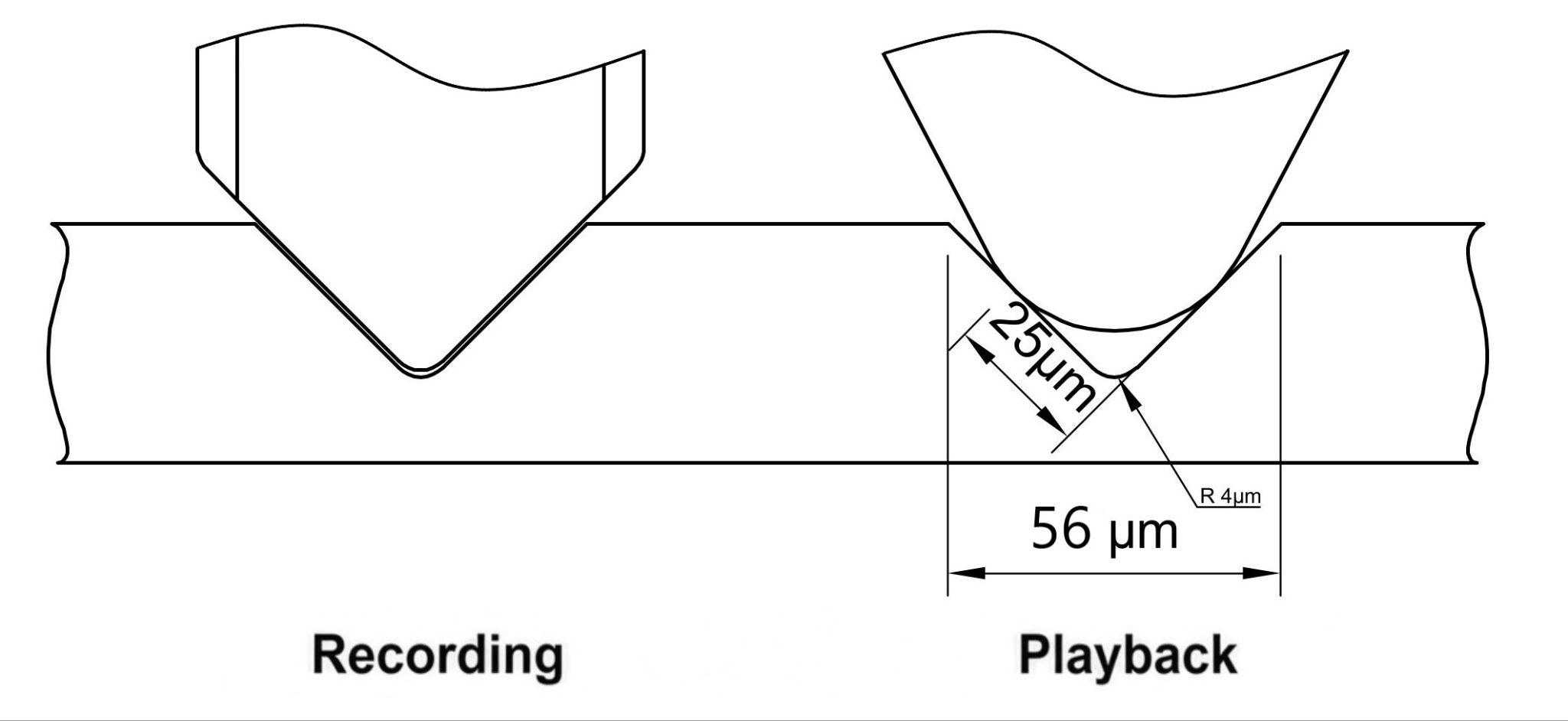
Amplitude limits when cutting the master disc
Let us consider at least three limits on the amplitude that has to be cut.
First limit — geometric. It is set by the back angle of the cutting-head stylus (45°), so radial velocity must never exceed tangential velocity. This additionally imposes a 6 dB/octave limit on the input programme from about 2 kHz (described in more detail below).
Second limit — kinematic. It is related to the radius of contact (the osculating circle) of the playback stylus while tracing this groove (more below).
Third limit — thermal (coil heating). The signal recorded with the IRIAA (Inversion RIAA) correction curve is essentially a velocity signal, rising by 6 dB per octave above 2 kHz. Since coil current produces the force, however, the current needed in the coil to hold a constant velocity must also rise with frequency by 6 dB/octave… Thus, in the range where overheating is the critical factor, power rises by 12 dB/octave from 2122 Hz. At 20 kHz it increases by about 40 dB (10,000 times!) to produce the same signal level as at 1 kHz.
Fortunately the other limits keep us from that. Even so, peak amplification power of 500 W was no longer unheard of, and the “loudness war” eventually led to kilowatt amplifiers (and plenty of burnt cutting-head coils, even with helium cooling).
Geometric limits
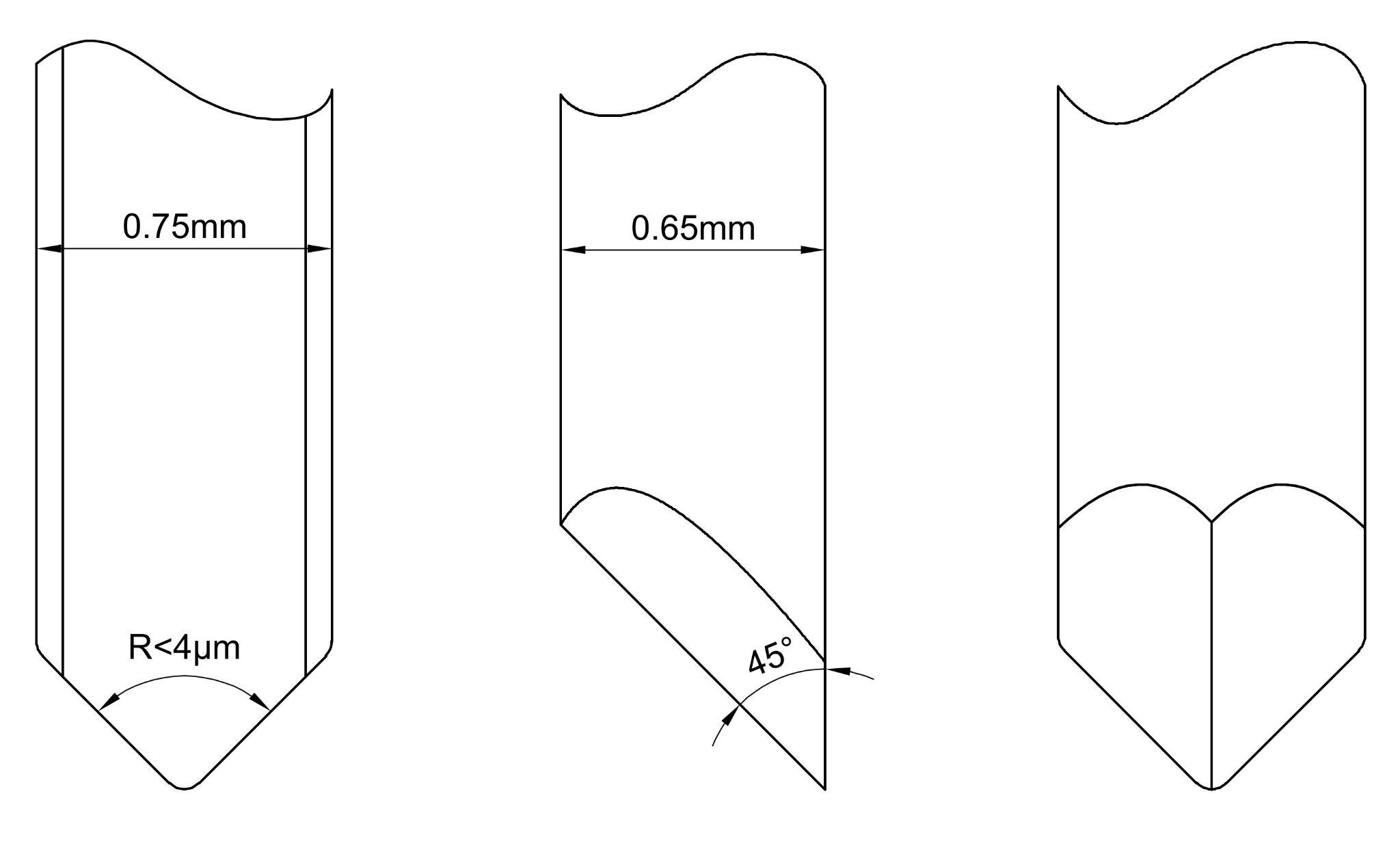
There are theoretical limits when cutting lacquer discs (or metal masters) that would seem to limit recording velocity. Empirical studies show, however, that real data must be added to these theoretical calculations.
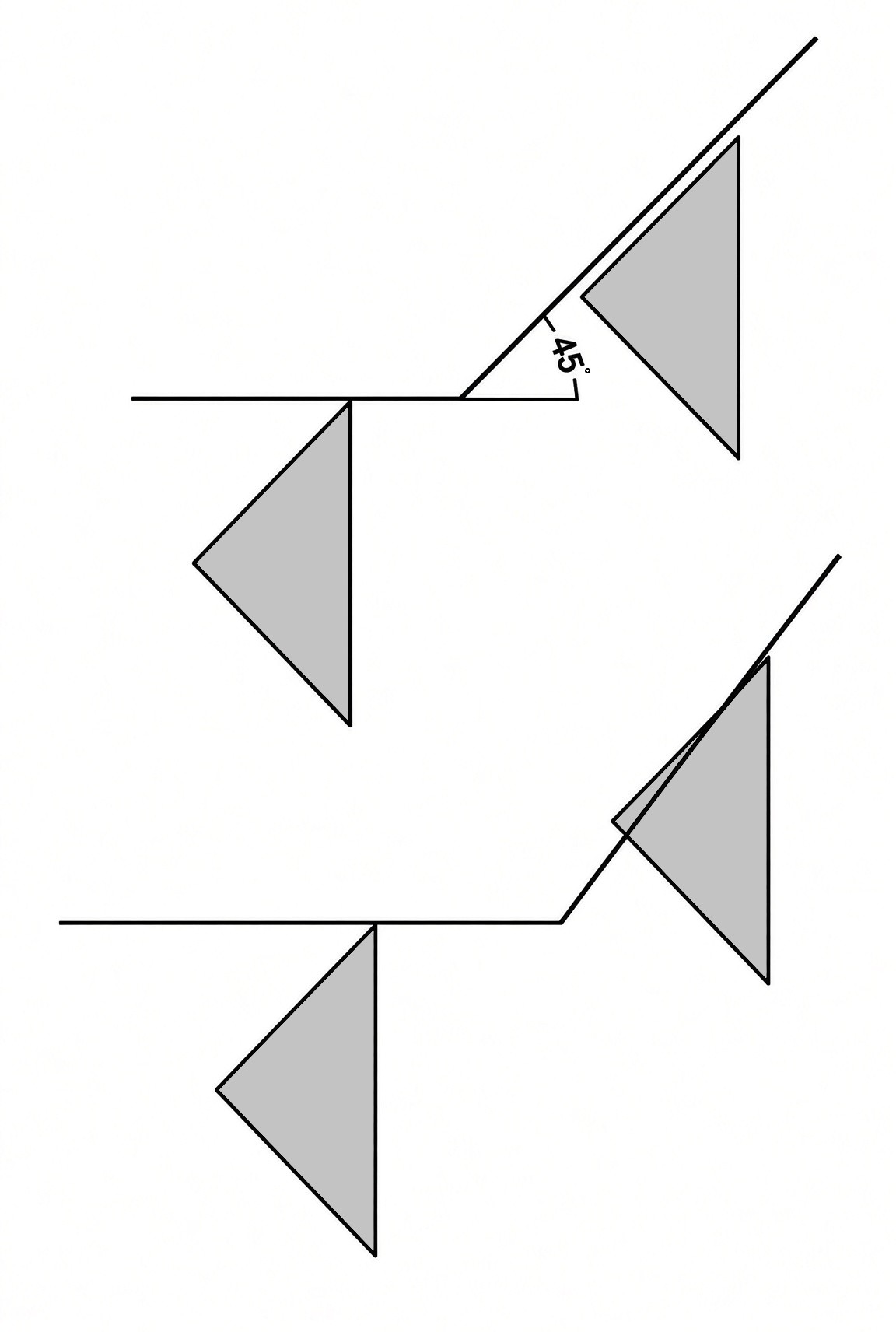
In theory a very simple rule applies: the maximum (peak) velocity of the cutter cannot exceed the linear tangential velocity of the groove. If the cutter moves too fast (at an angle over 45°), the facet on its back face begins to touch the groove just cut, deforming or destroying its walls.
This rule is complicated somewhat by the fact that tangential velocity changes along the whole length of the spiral. Even so, its limits can be defined very precisely. At the outer edge of the record the linear velocity is 0.509 m/s, and nearest the centre it falls to 0.196 m/s. Thus on a long-playing record (LP) at 33⅓ rpm the recording velocity never exceeds 50 cm/s, and even that figure is reached only on the very first, outermost groove.
This conclusion is confirmed by numerous measurements, including a comprehensive study by Shure Brothers Inc. They show that no useful modulation ever goes beyond 50 cm/s. Higher-level signals can arise only from mechanical damage to the grooves, which is an anomaly.
The same rule applies to other types of records. For example, the maximum recording velocity for a 12-inch single at 45 rpm is 68 cm/s. At the same time, the maximum recording velocity on the outer track of a 12-inch record at 78 rpm reaches 118 cm/s, which is 7.5 dB higher than on a standard long-player (LP).
Kinematic limits (limits on playback).
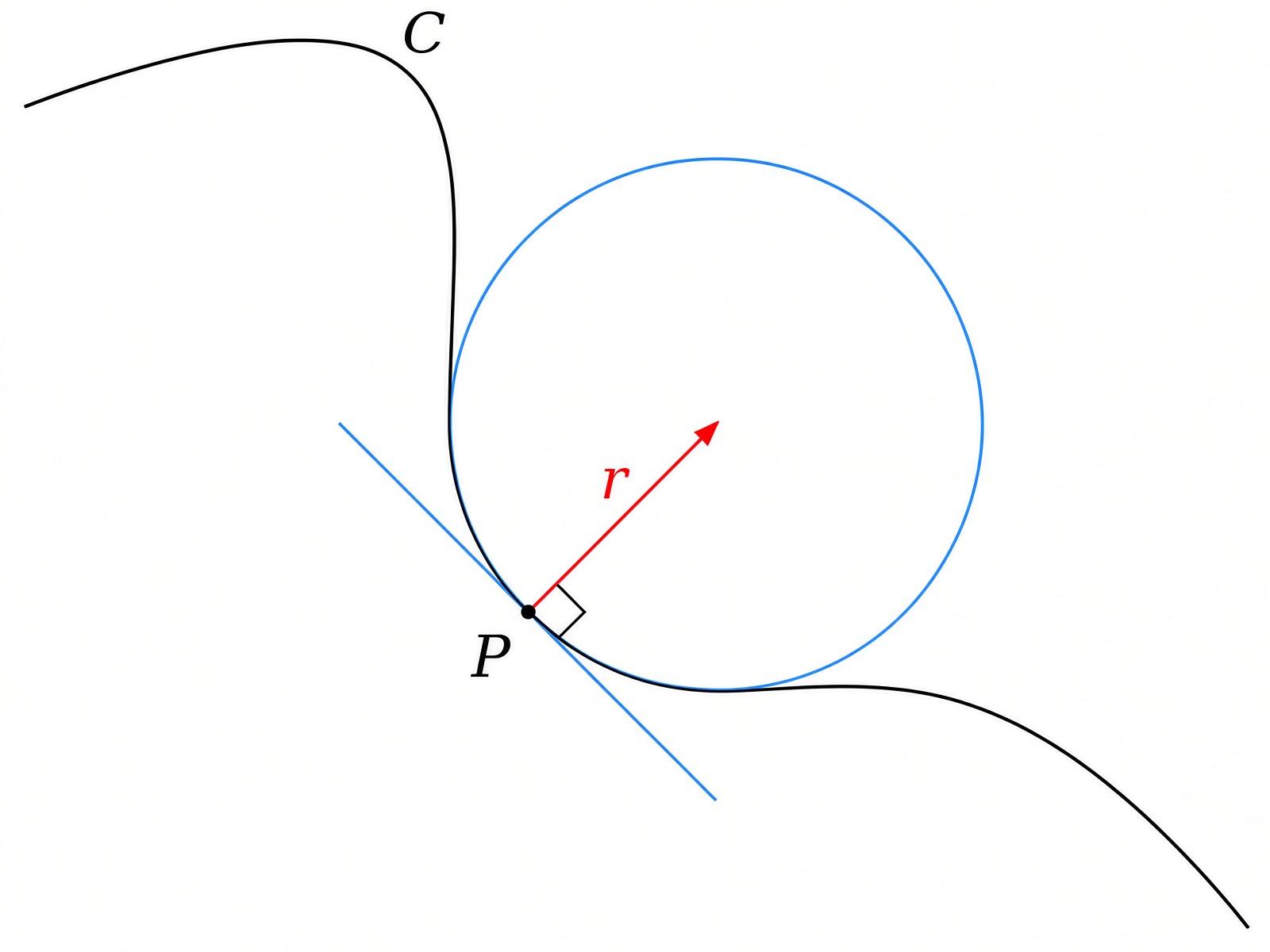
When playing a gramophone record the situation becomes considerably more complex than the considerations above. An additional limit on playback velocity appears: it arises when the radius of the stylus exceeds the radius of the recorded curve of the groove.
Obviously the maximum velocity cannot be reached if the effective stylus radius is larger than the radius of the osculating circle at any point of the curved path. Put simply: the stylus physically cannot “fit” into the sharp turns of the groove.
Finding the minimum radius of any section of a smooth curve at a point (P) belongs to differential geometry. The mathematical solution is the osculating circle (or “circle of contact”), which best approximates the curvature (C) at the point (P).
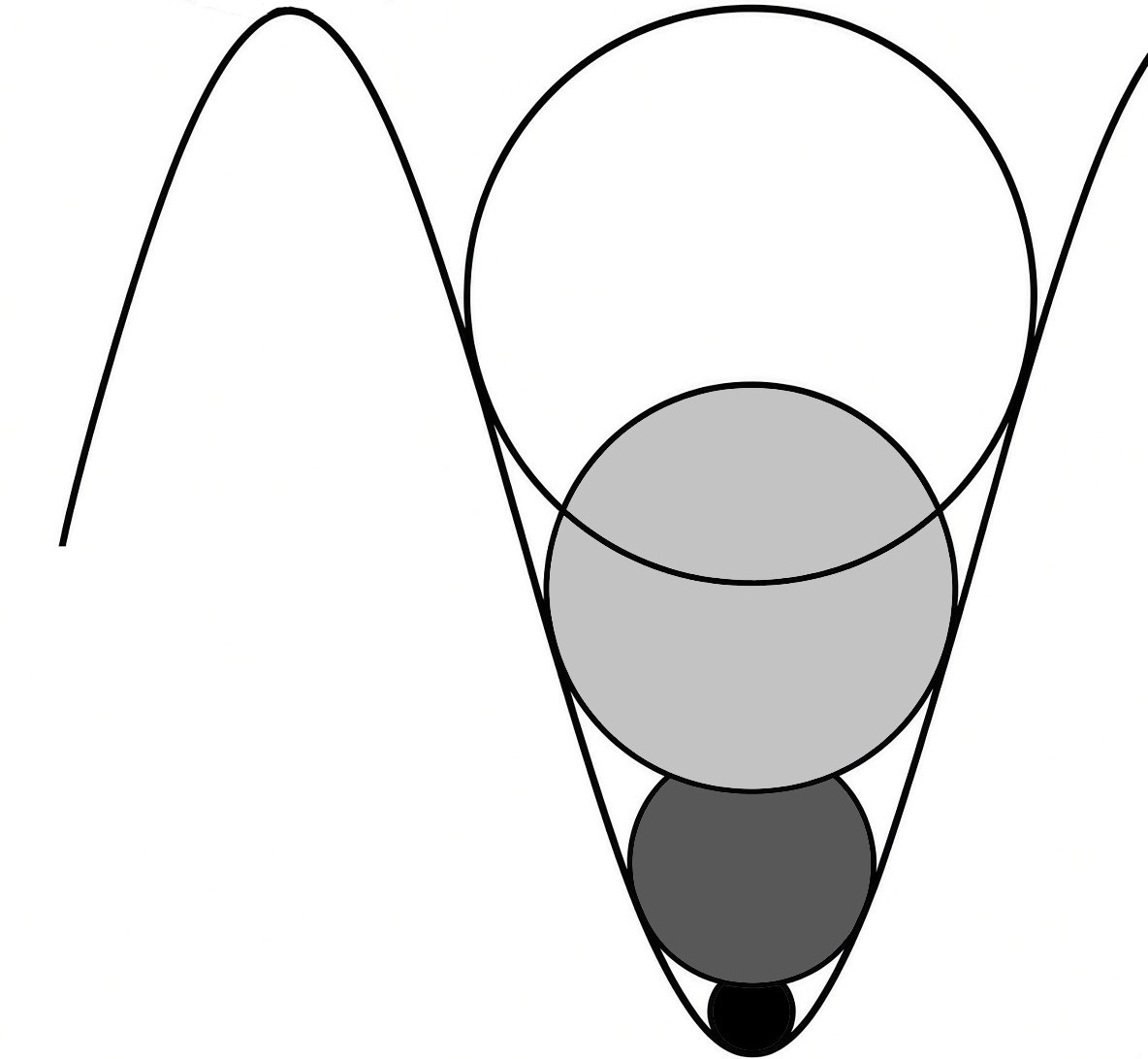
This is also called wavelength loss: the greater the difference between the geometry of the cutting-head stylus and the diamond stylus of the cartridge, the greater this loss.
This phenomenon can also be regarded as a limit of acceleration. That is, during recording (cutting) velocity limits apply, while during playback acceleration limits apply. It is quite natural that the peaks of greatest acceleration coincide with the points of maximum bend of the groove. In fact this is a simplification, because acceleration is sometimes deliberately limited already at the recording stage.