
Vinyl mass noise (on average −40 dB).
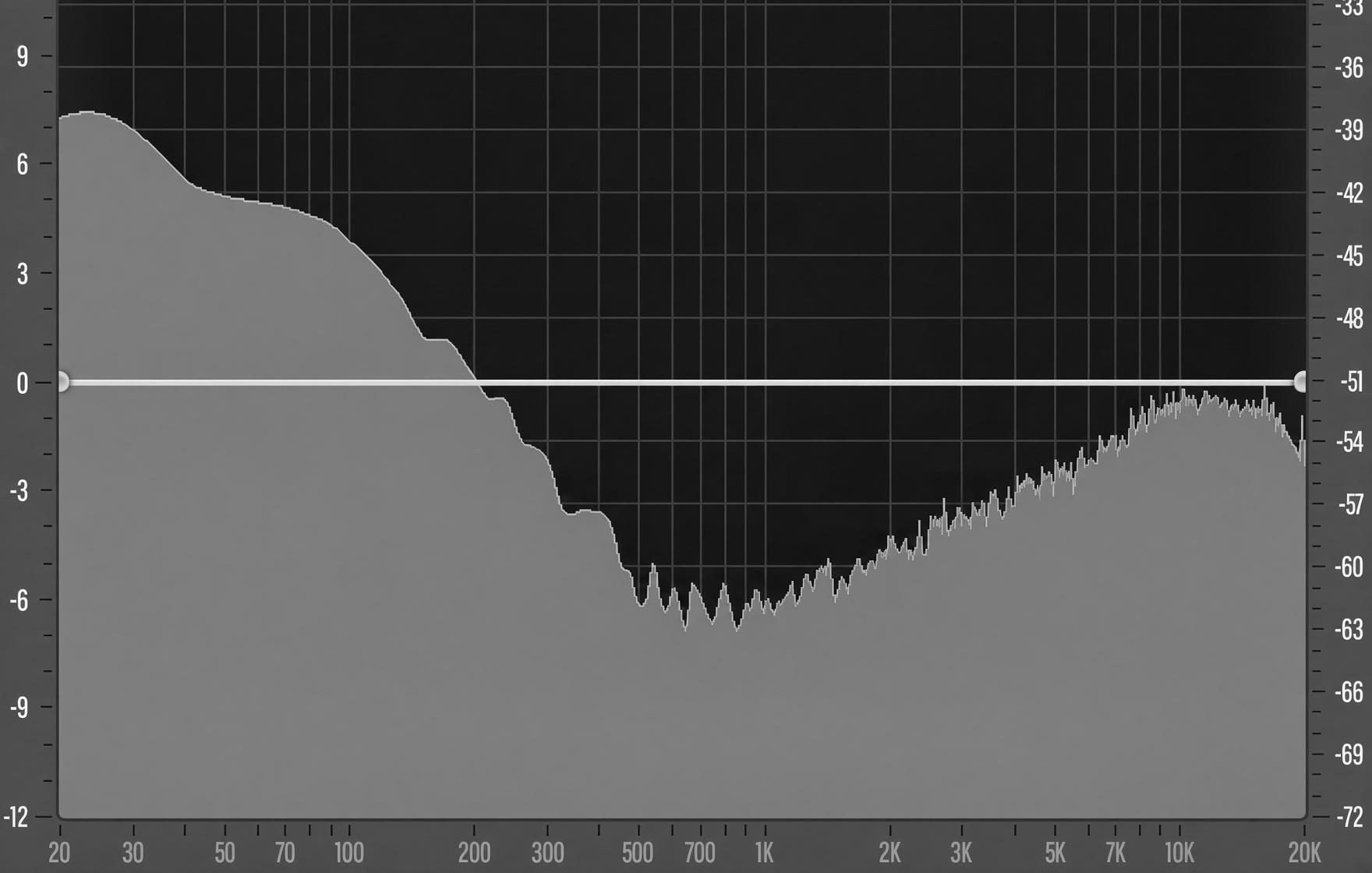
Despite constant claims of a signal-to-noise ratio (SNR) for the vinyl record of about 70 dB in theoretical maximum, in reality the noise of the vinyl mass itself, depending on the quality of PVC, is about −40 dB and reaches even −36 dB and puts an end to such statements.
One should also not forget the complicated process of creating the record itself, which consists of many stages:
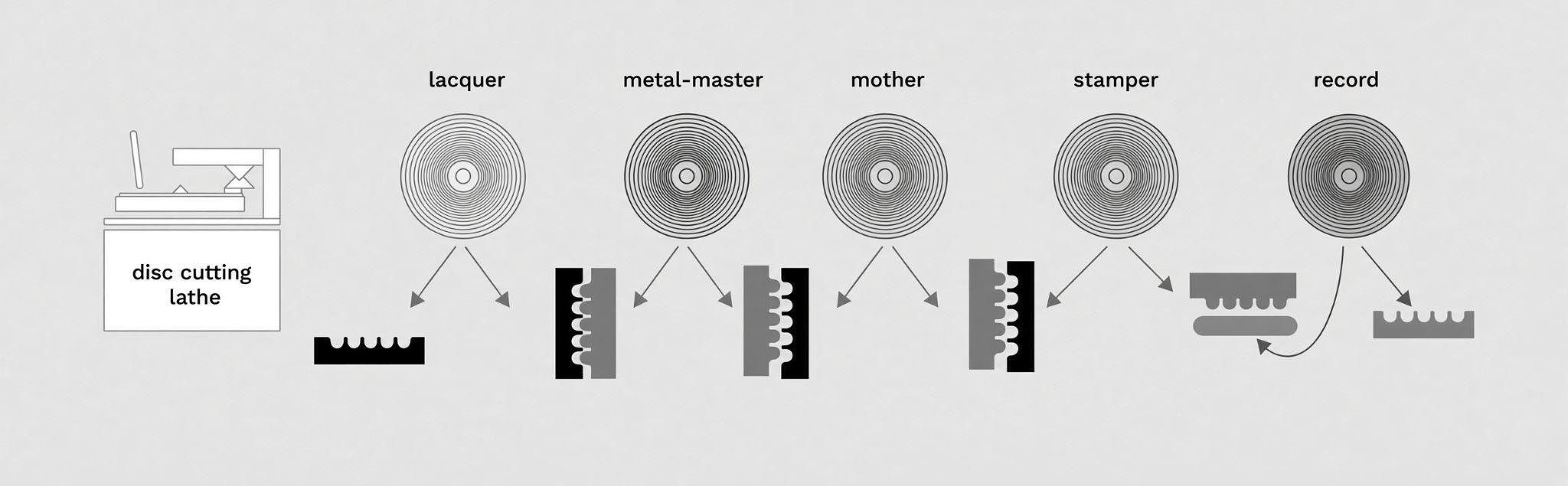
Each of these successive stages in the so-called “galvanic family” adds an average of +6 dB of noise and a lot of distortion.
Roughness of the vinyl surface.
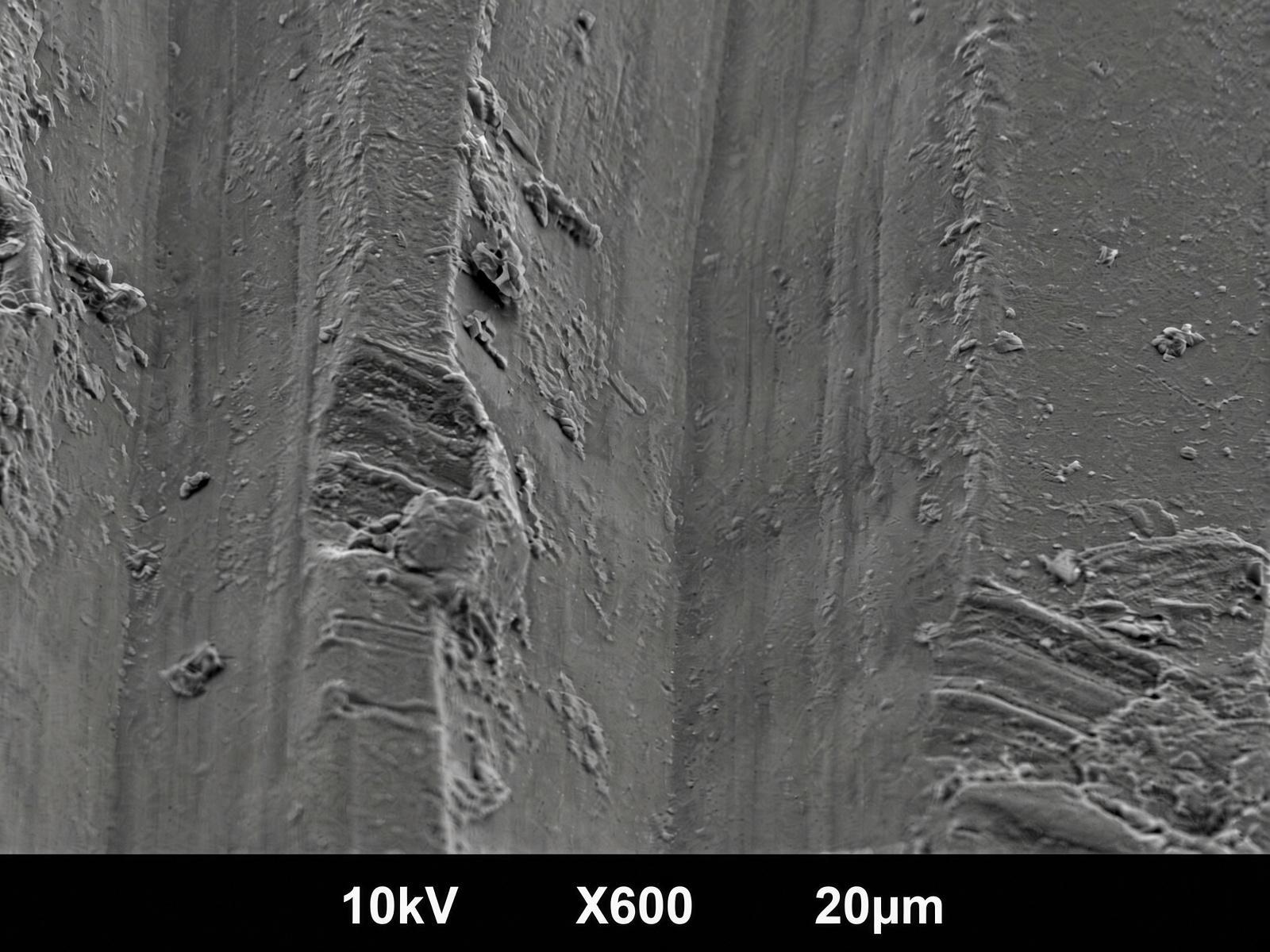
The average surface roughness (Ra) of high-quality PVC of a vinyl record (LP) is about 25 nanometers (nm).
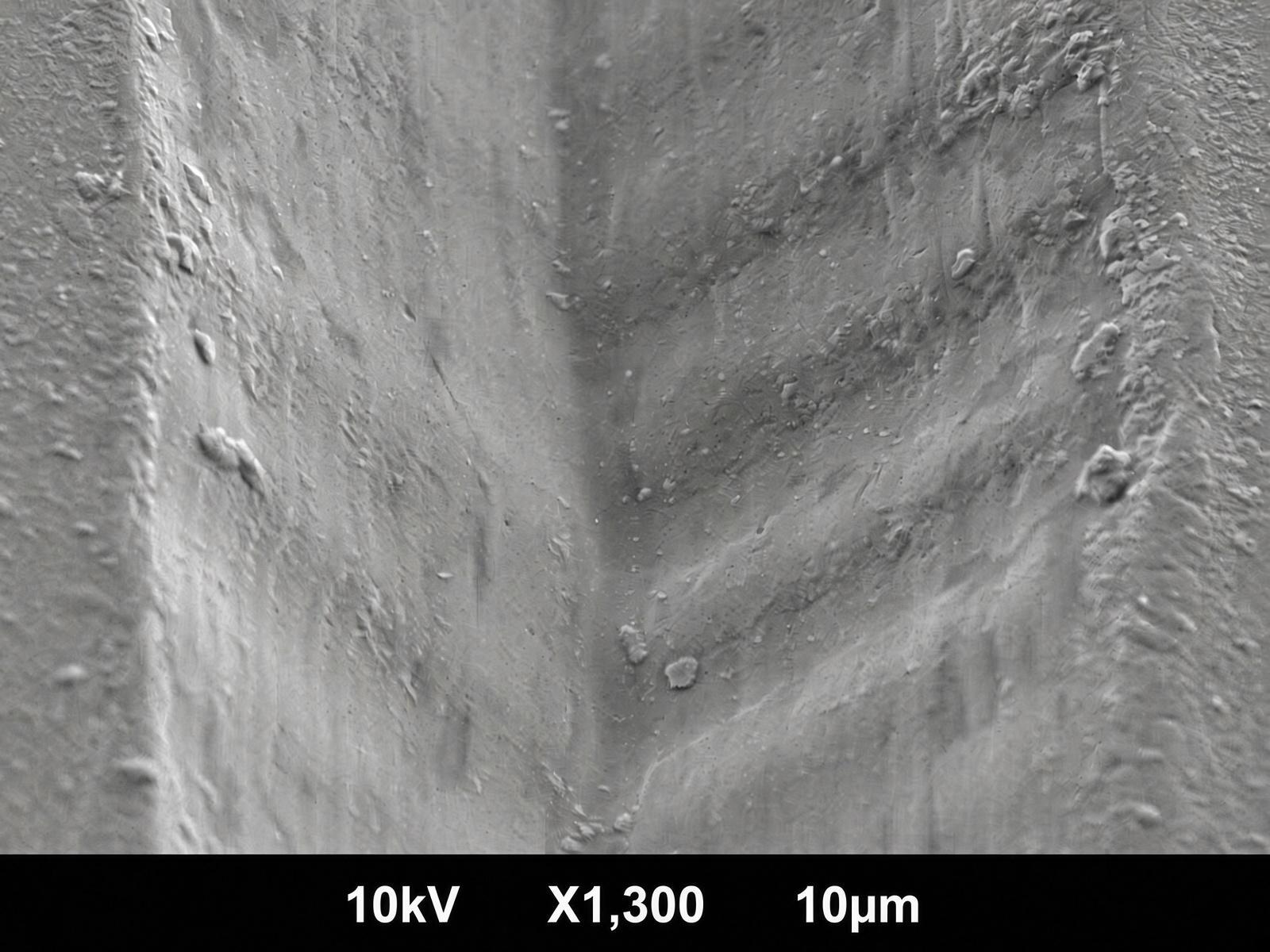
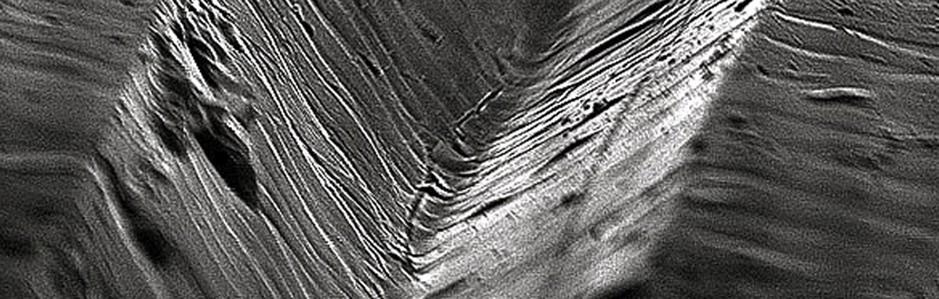
Why is this important for the sound?
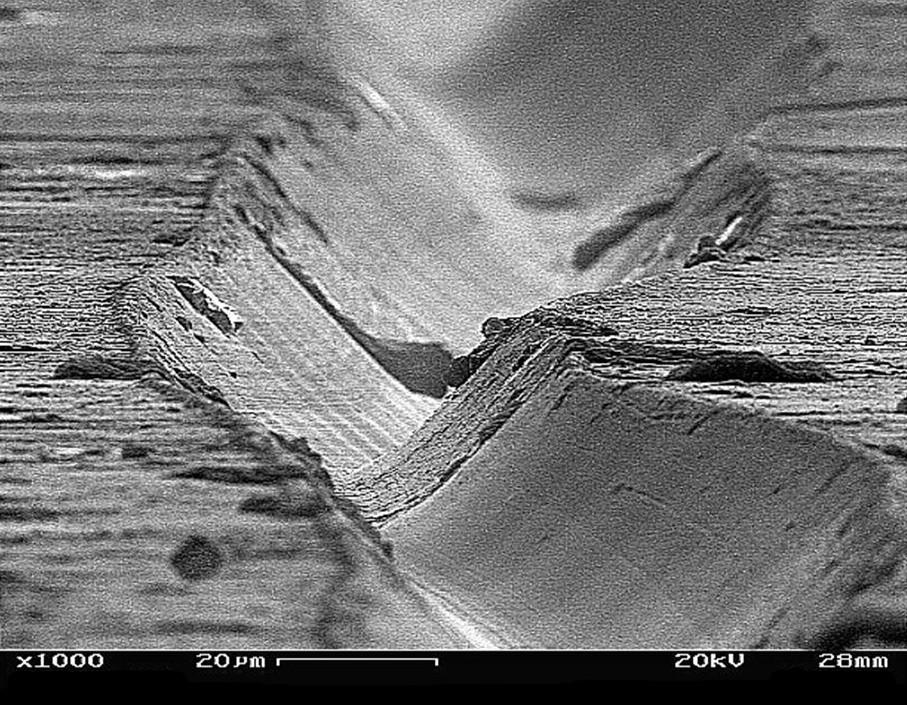
- Physical limit of the dynamic range: this microscopic roughness (about 1/20 of the wavelength of visible light, which gives the record its characteristic gloss) creates the natural background noise of the vinyl record.
Taking this roughness into account, the maximum theoretical signal-to-noise ratio for the record is about 68–69 dB, which corresponds to the resolution of 13-bit digital sound.
- Comparison with the size of the sound track: the width of the sound groove on a vinyl record is about 35–80 microns (35,000–80,000 nm). This means that the natural roughness of the groove walls is almost a thousand times smaller than its total width.
- Reading with the stylus: the rounding of the tip of the diamond stylus typically has a radius of 2 to 18 microns (depending on the cut: spherical, elliptical or line contact). The stylus slides smoothly along the track, but because of the microscopic surface roughness and dust particles the same barely noticeable background noise of the record (“sand”) appears, audible in the pauses between tracks.
The smallest deviations (modulations) of the groove walls, responsible for quiet high-frequency sounds (for example overtones around 15–20 kHz), are measured in nanometers and range from 10 to 100 nanometers (0.01–0.1 micrometers). The theoretical lower limit that a high-quality stylus can register under ideal conditions is close to 1 nanometer (or even fractions of a nanometer for micro-signals at the level of thermal noise), proportional to the size of individual molecules of polyvinyl chloride (PVC).
To better understand the scale and how the vinyl track is arranged at the micro level, the parameters are compared in the table below:
Dimensions and geometry of the vinyl track:
| Parameter | In microns (μm) | In nanometers (nm) | Comparison context |
|---|---|---|---|
| Material roughness | 0.025 μm | 25 nm | Internal roughness of smooth PVC |
| Smallest sound fluctuations | from ~0.01 μm | from ~10 nm | Microscopic high-frequency (HF) details |
| Stylus tip radius (sharp side) | 2 – 18 μm | 2,000 – 18,000 nm | Depends on the cut (spherical, elliptical, etc.) |
| Sound groove depth | ~28 – 35 μm | 28,000 – 35,000 nm | Nominal depth according to standards |
| Groove width on the surface | ~35 – 80 μm | 35,000 – 80,000 nm | About the thickness of a human hair |
| Maximum bass amplitude | up to 76 μm | 76,000 nm | Maximum physical side-to-side motion of the groove |
Why are these numbers so impressive?
- Smaller than a bacterium: irregularities in the groove 10–100 nm long are much smaller than the wavelength of light or the size of most bacteria.
- Why vinyl is “sandy”: a typical dust particle is 20 to 100 microns (20,000 to 100,000 nm). For a diamond stylus reading microscopic nanometric modulations, dust is a giant “stone”, causing loud crackles or skips in the track.